Use the One Stop Shop to report and pay EU VAT You can use this optional scheme to report and pay all your EU VAT through one return. This means you don’t need to register and pay VAT in each EU country you sell to. The scheme applies to sales to individuals or businesses in the EU who aren’t VAT registered. The available schemes are: - One Stop Shop (OSS)
- Import One Stop Shop (IOSS)- applies only to businesses in Great Britain
For the One Stop Shop schemes, you charge Destination VAT. This means you apply the VAT rate of the country where your customer is based, instead of the UK rate. EXAMPLE: If you’re a UK business selling goods to a customer in France, you charge VAT at the rate used in France. ▼ The One Stop Shop (OSS) Use the One Stop Shop (OSS) to report and pay EU VAT on services to EU consumers, which attract destination VAT. For a full list of services, visit the European commission website. The OSS also lets you report and pay EU VAT for intra-community sales of goods. This applies to businesses based in Northern Ireland that have an XI VAT registration. On 1 July the EU also abolished distance selling thresholds and replaced them with a single EU-wide €10,000 (£8,818) threshold. ▼ The Import One Stop Shop (IOSS) Use the Import One Stop Shop (IOSS) to report and pay VAT on goods imported from outside the EU or Northern Ireland, and sold to consumers in the EU or Northern Ireland. Businesses based in Northern Ireland can register directly. Businesses in Great Britain must appoint an intermediary to register and act on their behalf. On 1 July the EU also abolished distance selling thresholds and replaced them with a single EU-wide €10,000 (£8,818) threshold. Destination VAT in Sage Accounting Destination VAT settings and reports are available in Sage Accounting. Apply destination VAT in VAT settings Choose whether to apply Destination VAT rules to sales to EU customers. The system automatically adds the ledger account 2206 VAT on Destination sales so you can report the total amount charged for Destination VAT separately. 
For a full list of services that attract destination VAT, go to the European Commission website at European commission website. Apply destination VAT to sales invoices Once you add an EU consumer (not VAT registered) and an OSS service to an invoice, the destination VAT rate automatically calculates. Northern Ireland only: Once you add an EU consumer (not VAT registered) and a product to an invoice, the destination VAT rate automatically calculates. Great Britain only: When you add an EU consumer who is not VAT registered and include a product on an invoice, select Apply £135 (€150) consignment rules to charge Destination VAT on goods valued at £135 (€150) or less. 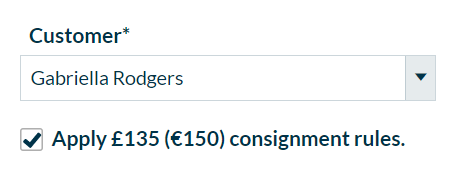
Recurring invoices and destination VAT When you apply Destination VAT in your financial settings, recurring invoices for EU customers pause and show a status of Action Required. Create a copy of the invoice to recalculate the Destination VAT rate automatically, then delete the original invoice. Run the destination VAT report The OSS Sales Analysis report in Reporting shows all sales where you've charged Destination VAT. Use this report to help complete your One Stop Shop VAT Return. Invoicing with destination VAT Before you start If you need to charge destination VAT, check that you’ve added: - Destination VAT rules in financial settings
- An EU customer who isn’t VAT-registered
▼ Business in Great Britain Create a sales invoice for goods under £135 - Go to Sales, and select New Invoice.
- In the Customer field, select your EU customer from the list, or type the customer name. If the customer isn’t a saved contact, select Add a customer to create a record for them.
- Select Apply £135 (€150) consignment rules to charge destination VAT on goods with a total consignment value of £135 (€150) or less.
TIP: For this option to show, check that you selected: - Destination VAT rules in financial settings
- An EU customer that isn’t VAT registered
- Enter a Description.
- In EU Goods/Services, select Goods (and related services) to apply destination VAT rules. The destination VAT rate automatically calculate.
- Repeat steps 4 and 5 on a new line for as many items as you need to add to your invoice. The total value of goods must not exceed £135 (€150).
TIP: If you need to add a service item that doesn’t have destination VAT rules, you must create a separate invoice. This is because invoices can’t contain a mixture of home VAT rules and destination VAT rules. - Select Save.
The VAT Return The VAT element on destination VAT sales is excluded from your VAT Return. You need to report this on your IOSS VAT Return through the IOSS system.
Create a sales invoice for OSS services - Go to Sales, and select New Invoice.
- In the Customer field, select your EU customer from the list, or type the customer name. If the customer isn’t a saved contact, select Add a customer to create a record for them.
- Enter a Description.
TIP: To calculate destination VAT on the invoice, check that you selected: Repeat steps 3 and 4 on a new line for as many items as you need to add to your invoice. -
Select Save. The VAT Return The VAT element on destination VAT sales is excluded from your VAT Return. You need to report this on your OSS VAT Return through the OSS system. ▼ Businesses in Northern Ireland Create a sales invoice for goods - Go to Sales, and select New Invoice.
- In the Customer field, select your EU customer from the list, or type the customer name. If the customer isn’t a saved contact, select Add a customer to create a record for them.
- Enter a Description.
-
In EU Goods/Services, select Goods (and related services) to apply destination VAT rules. The destination VAT rate will automatically be calculated . TIP: To calculate destination VAT on the invoice, check that you selected: - Destination VAT rules in financial settings
- An EU customer that isn’t VAT registered
- Repeat steps 3 and 4 on a new line for as many items as you need to add to your invoice.
-
Select Save. The VAT Return The VAT element on destination VAT sales is excluded from your VAT Return. You need to report this on your OSS VAT Return through the OSS system. Create a sales invoice for OSS services - Go to Sales, and select New Invoice.
- In the Customer field, select your EU customer from the list, or type the customer name. If the customer isn’t a saved contact, select Add a customer to create a record for them.
- Enter a Description.
-
In EU Goods/Services, select Services (standalone) to apply destination VAT rules. TIP: To calculate destination VAT on the invoice, check that you selected: - Destination VAT rules in financial settings
- OSS Services for the service item
- An EU customer that isn’t VAT registered
Repeat steps 3 and 4 on a new line for as many items as you need to add to your invoice. -
Select Save. The VAT Return The VAT element on destination VAT sales is excluded from your VAT Return. You need to report this on your OSS VAT Return through the OSS system. |